
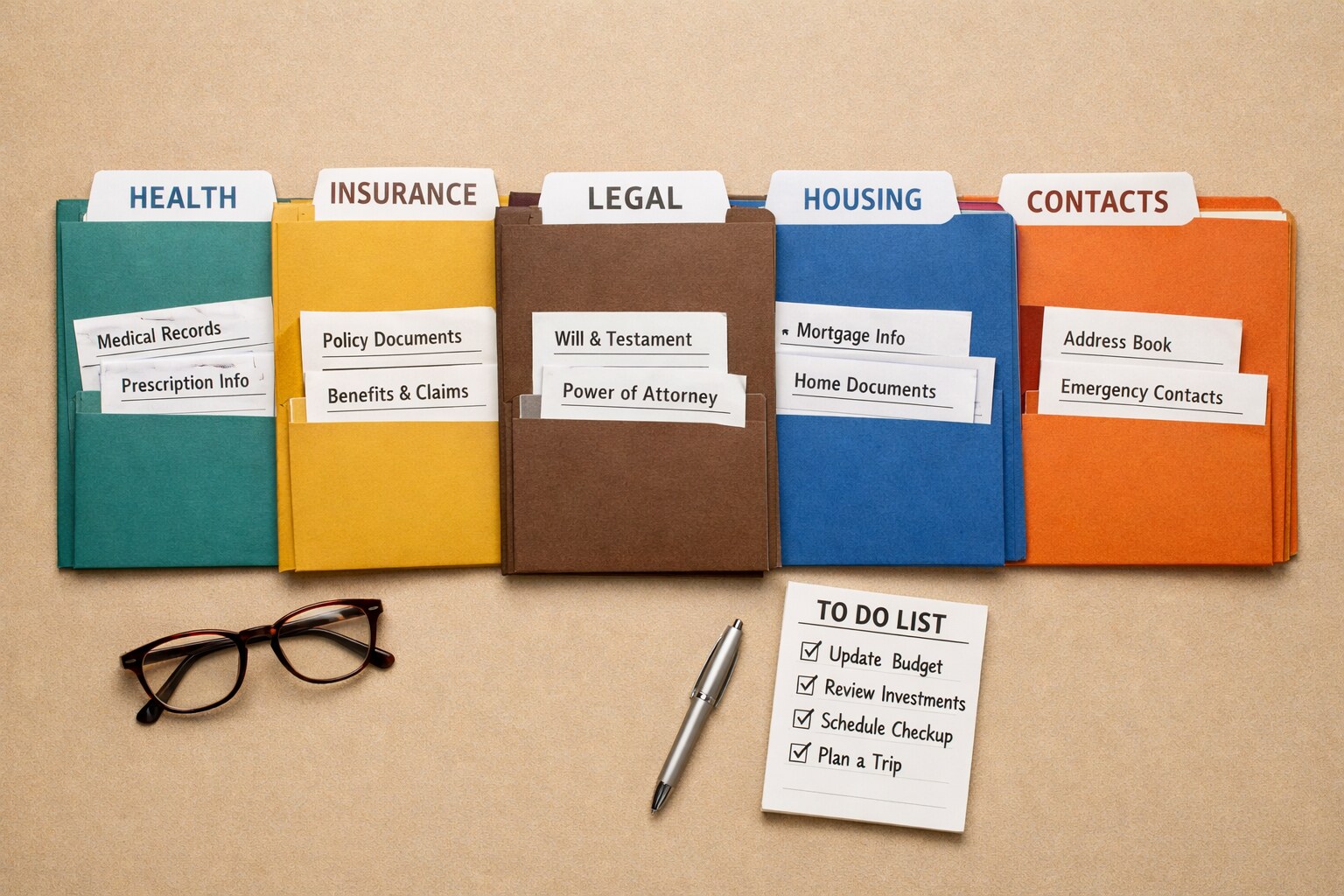
Article content
When people talk about getting organized, they often mean buying folders and feeling virtuous for a weekend. The real goal is to make sure the right person can find the right document under pressure without digging through fifteen years of receipts and greeting cards.
Start with identity documents: driver's license or state ID, Social Security card if you still keep it, birth certificate, marriage certificate or divorce papers if relevant, passport if one exists, and any military discharge papers. These are the documents other systems keep asking for when a crisis is already underway.
Then gather the cards and records tied to health and insurance: Medicare card, supplemental or Advantage plan cards, prescription coverage card, long-term care insurance if you have it, a current medication list, and the names and numbers of your regular clinicians.
Emergency contacts should be written down, not stored only in a phone someone cannot unlock. Include who should be called first, who has a key, who handles medical questions best, and who knows where the rest of the documents are kept.
Advance directives, health care proxy forms, and powers of attorney belong in the usable file, not hidden in a safe-deposit box no one can reach on a Saturday. Originals matter, but copies that the right people can actually access matter too.
Property and money basics should be organized without turning into a complete financial diary. Keep account institution names, the type of account, mortgage or lease information, insurance policies, and the location of deeds, titles, and tax records. Leave clear directions, not a scavenger hunt.
Benefits paperwork deserves its own section. Keep recent Social Security, Medicare, pension, VA, or other benefit notices together and use the Benefit records tracker if you are already dealing with calls, denials, or appeals. Benefits trouble gets worse when the letters are scattered.
Store originals where they are secure but reachable. Keep working copies in a clearly labeled home file. Then tell one or two trusted people where both sets are. A perfectly organized binder that nobody knows exists is just another hiding place.
Do not build an impossible binder. Nobody needs twelve tabs of old utility statements and every lab report from the last decade. Keep the file lean enough that another adult can sit down, open it, and understand the layout in five minutes.
If a denial, appeal, or legal meeting may be coming, read How to Prepare for a Legal Aid or Benefits Appeal Meeting. If you are organizing because a spouse is frail or very ill, also read The First 48 Hours After a Spouse Dies: Paperwork and Calls to Make First. Both articles show what papers people always wish they had gathered sooner.
The test is simple: if someone had to step in for you tomorrow, could they find what matters without calling three relatives and opening every drawer? If the answer is no, that is the work.
Common questions
What documents should retirees have organized before a crisis hits?
Start with identity papers: driver's license, Social Security card, birth certificate, marriage or divorce papers, passport, and military discharge papers, since these are what hospitals, banks, and benefit offices ask for first. Add health and insurance cards, including Medicare, supplemental or Advantage plan cards, prescription coverage, a current medication list, and your clinicians' names and numbers. Round it out with written emergency contacts and the location of your property and account records.
Where should I keep my power of attorney and advance directive?
Not locked in a safe-deposit box no one can reach on a Saturday. Keep advance directives, health care proxy forms, and powers of attorney in the same usable file as your other core documents, with copies where the people who'd need them can actually get to them. Originals still matter, but an original nobody can find when it's needed doesn't help anyone.
Do I need a big filing system to get organized, or just the basics?
A lean file works better than an elaborate one. You don't need twelve tabs of old utility bills or a decade of lab reports — you need the core identity, medical, benefits, and authority documents in one place that another adult could open and understand in five minutes. Store originals somewhere secure but reachable, keep labeled working copies at home, and tell one or two trusted people where both sets live.
How should I organize Social Security, Medicare, and other benefit paperwork?
Give benefits notices their own section instead of mixing them into the general pile. Keep recent Social Security, Medicare, pension, and VA notices together, since scattered letters make an existing problem harder to sort out. If you're already fielding calls, denials, or appeals, the Benefit records tracker tool can help you keep it straight.