Article content
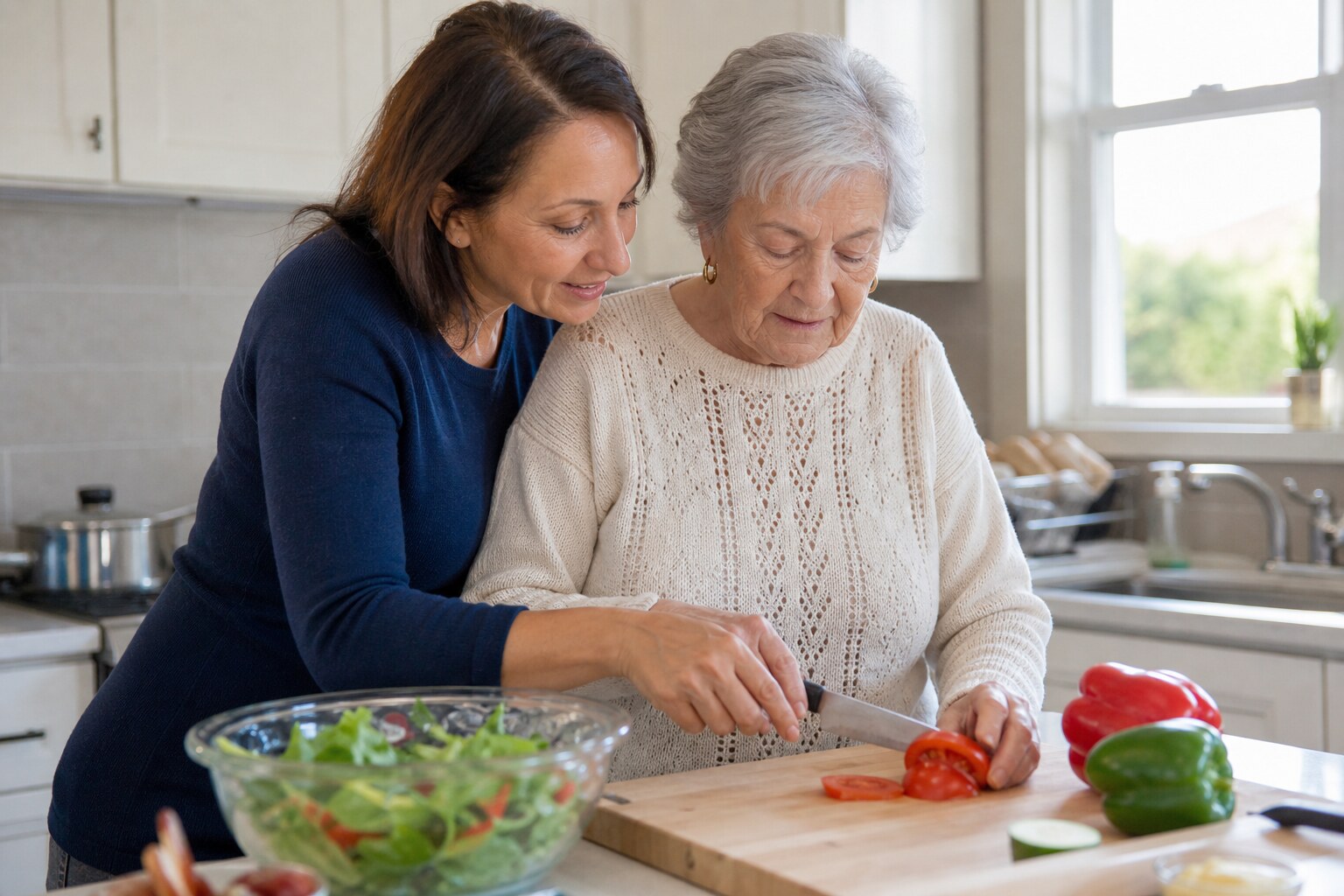
Some senior living communities are now running their kitchens like part of the care plan, not just the dining room, calling it a "food-as-medicine" approach for residents with memory loss. The idea is simple even if the name sounds clinical: what's on the plate affects mood, energy, and how the rest of the day goes.
You don't need a commercial kitchen or a nutritionist on call to use the same idea at home. You need a short list of meals that are easy to make, easy to eat, and worth repeating on the weeks you're running on empty yourself.
Personalize this article
Name who you're cooking for
This personalizes the rest of the article and your download.
Start With Meals That Don't Need a Fork Fight
Appetite and coordination both slip with memory loss, and a complicated plate can turn into a stand-off. Favor foods that can be eaten with a spoon or by hand — soft scrambled eggs, oatmeal with soft fruit, shredded chicken over rice, or a smoothie with protein powder blended in.
If {{lovedOneName|your loved one}} tends to wander from the table mid-meal, keep the first few bites the most nutrient-dense ones — protein and healthy fat first, starchy sides last.
Checklist
Set the table up to succeed
A few small changes remove most mealtime friction.
0 of 4 done.
Use Real Meal Programs Instead of Doing It All Yourself
You do not have to cook every meal from scratch to make this work. Home-delivered and congregate meal programs funded through the Older Americans Act exist specifically so family caregivers aren't the only nutrition plan.
Ask about texture-modified options if chewing or swallowing has gotten harder — many local programs can adjust for that if you ask directly instead of assuming they can't.
Timeline
Bring in outside help this week
Check off each step as you complete it.
Ask what home-delivered or congregate meal programs serve your area and whether texture-modified meals are available.
Try one item from your checklist above and note how responds.
Share what you've tracked so a doctor or dietitian can weigh in on real patterns, not a guess from memory.
If mealtime is one piece of a bigger appointment coming up, read Caregiver Questions to Ask at a Memory Loss or Dementia Appointment before you go.
Keep Family Updated Without Repeating Yourself
Food changes are exactly the kind of detail that gets lost between visits, calls, and siblings checking in separately. Write it down once and share it, instead of retelling the same update to four different people.
Save your plan
Save what you tried and what worked so you're not reconstructing it from memory next week.
Common questions
What foods help at mealtime for someone with memory loss?
Favor foods that are easy to eat with a spoon or by hand, like soft scrambled eggs, oatmeal with soft fruit, shredded chicken over rice, or a smoothie with protein powder blended in. If your loved one tends to wander from the table, serve the most nutrient-dense bites — protein and healthy fat — first.
How can I make mealtimes easier for someone with memory loss?
Serve one course at a time instead of a full plate, use a plain solid-color plate so the pattern doesn't look like part of the food, keep the same seat and rough time every day, and have a simple backup meal ready for days when nothing else gets eaten.
Do I have to cook every meal myself?
No — home-delivered and congregate meal programs funded through the Older Americans Act exist specifically so family caregivers aren't the only nutrition plan. Call your local Area Agency on Aging to ask what's available, including texture-modified options if chewing or swallowing has gotten harder.
How do I track what's working at mealtimes?
Log how your loved one responds to new meals so you have a real pattern to share with a doctor or dietitian at the next appointment, instead of trying to reconstruct it from memory.