
Article content
Most people do not realize how many small home hazards they live around until one bad night proves the point. A dim hallway, a loose rug, one awkward step into the garage, and suddenly the house that felt familiar starts acting like an obstacle course. If you want to stay independent, start with the home you already have.
Do the first pass with a pen and no pride. You are not judging your housekeeping. You are looking for what makes walking, turning, reaching, bathing, cooking, and calling for help harder than it should be.
Start at the entry. Check whether the walkway is even, the porch light works, the house number is visible, and the door can be unlocked without standing on one foot and wrestling a bag. If the threshold catches your shoe even once a week, it matters.
Stairs come next because stairs do not forgive tired legs. Make sure both the top and bottom are lit, the handrail is firm, and nothing is being stored on the steps. Decorative baskets on stairs create an avoidable tripping hazard.
In the bathroom, look for the problems people ignore because they are used to them: slick floors, no solid grab point near the toilet or shower, dim lighting at night, and towels stored where reaching means twisting. The bathroom causes trouble fast because most tasks there happen half awake and in a hurry.
The bedroom should let you get out of bed, reach a lamp, and get to the bathroom without weaving around clutter. Put a light within reach, clear the path to the door, and keep shoes or slippers where you can step into them without bending sideways.
The kitchen does not need to be pretty. It needs to let you cook without carrying hot things across a crowded path or climbing for daily-use dishes. Move heavy pans and the most-used foods between shoulder and hip height. Save the top shelves for holiday platters and forgotten appliances.
Lighting affects every room. If a bulb burns out and you have been meaning to replace it for three weeks, treat that as a hazard, not a chore. Add brighter bulbs where safe, put night-lights in the hall and bathroom, and make sure switches are where a tired hand expects them to be.
Emergency communication belongs on the checklist too. Keep a phone charged, numbers posted, and a simple check-in plan if you live alone. Independence stays stronger when help can reach you quickly and calmly.
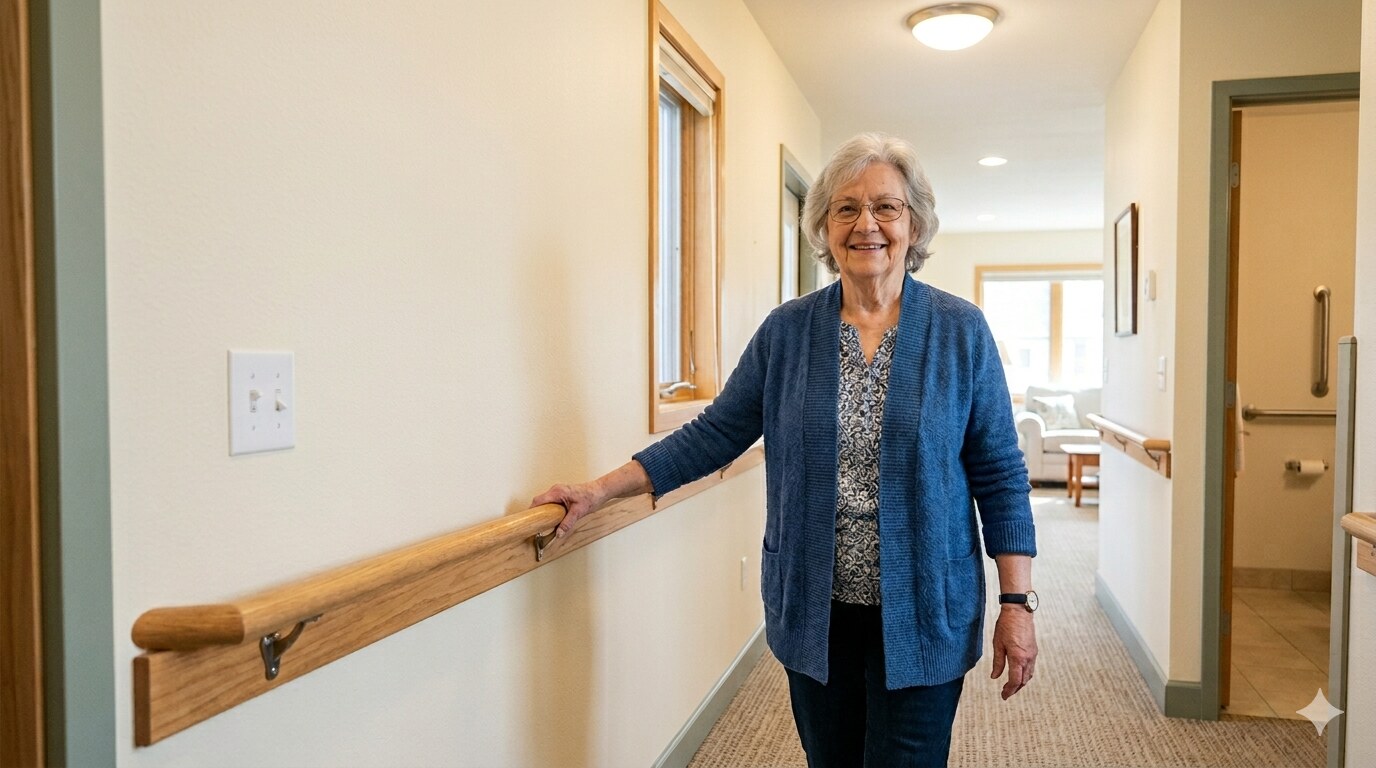
Some fixes can happen today: remove throw rugs, coil cords out of walkways, move supplies to easier shelves, add better bulbs, and clear the chair that has turned into a storage unit. Other fixes need outside help: grab bars, handrails, ramps, uneven flooring, or electrical work. Know the difference before you decide everything will be a do-it-yourself project.
If you are recovering from a recent fall, read After a Fall: A First-Week Recovery Plan and Fall Recovery Home Setup Plan for Safer Weeks Ahead. Both show what tends to break down after the first hard week at home.
Do not try to repair the whole house in one Saturday. Take one room at a time, starting with the room where you are most likely to be tired, rushed, or in the dark. That is where the best safety return usually sits.
Use the Home safety quick scan again near the end of the week and see whether the same rooms still look risky. If they do, that tells you where to spend money first.