
Article content
Day 1 should begin with two things: making sure you are safe now and making sure the right clinician knows what happened. Call your primary care office or urgent care line, explain the fall clearly, and ask whether you need imaging, a same-day visit, or emergency care.
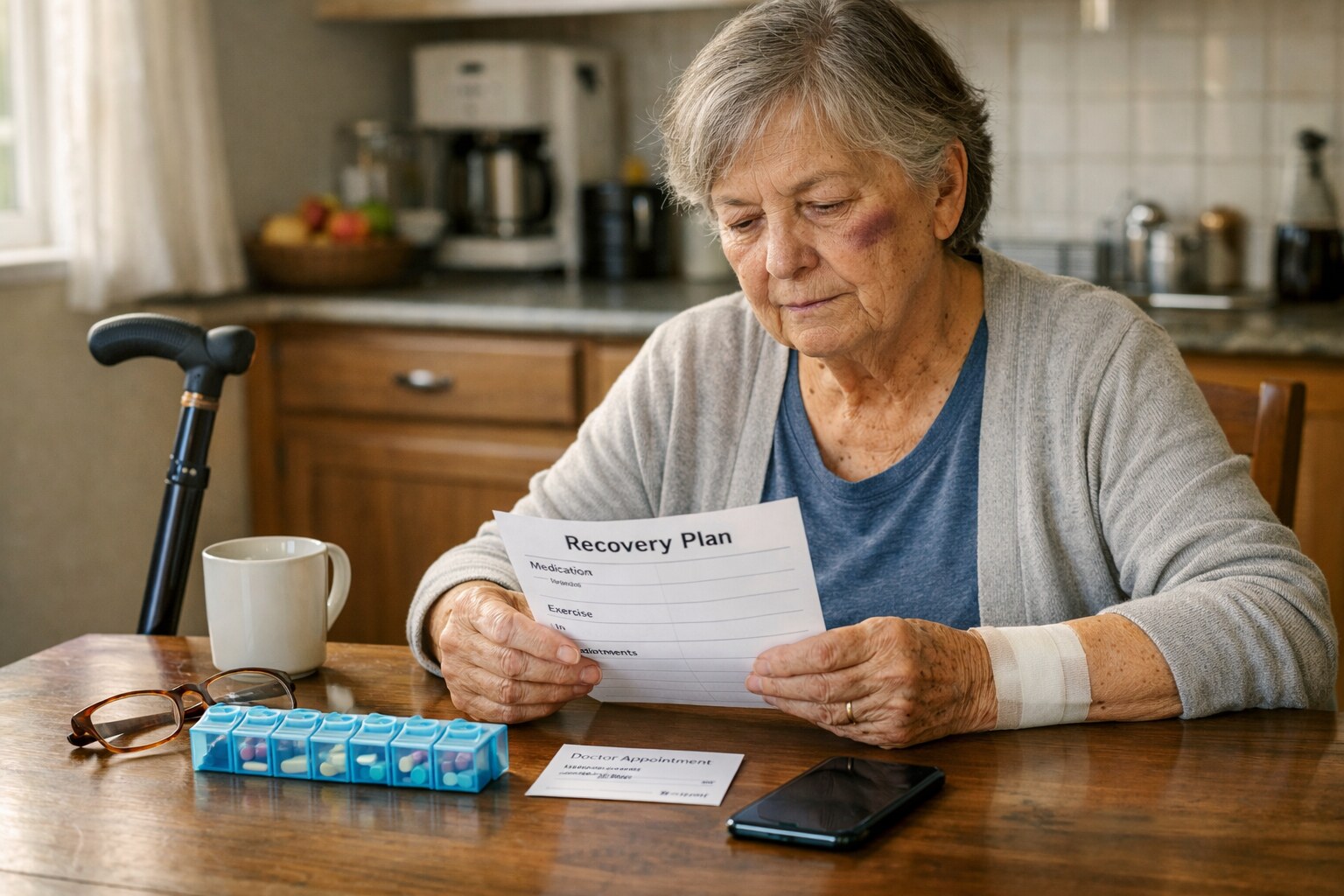
From there, start a simple notebook for pain, dizziness, swelling, and mobility morning and evening. Those notes give the next appointment something better than a fuzzy memory of a rough week.
If you live alone, set up a check-in plan for the next seven days before fatigue makes that conversation harder. One call in the morning and one in the evening is often enough to catch a problem while it is still small.
Once the immediate medical plan is clear, look at the house that you have to recover in. Ask for a home safety review focused on rugs, cluttered walkways, stair lighting, and bathroom support points, then remove one hazard per room in order of risk and effort.
As you make those changes, move essentials to waist level so daily routines stop requiring deep bending and awkward reaching. Medications, phone chargers, water, and the kitchen items you use every day should be easy to reach without thinking.
Do the same kind of planning with logistics. Set up help for groceries, rides, and medication pickup before you need it, because recovery usually gets harder when errands start stacking up.
At the follow-up appointment, keep the questions direct: what activities are safe now, what warning signs need urgent care, and what level of pain is expected for this stage of recovery. Clear answers here make the rest of the week less guesswork.
Before the first week ends, turn all of this into a two-week plan with follow-up dates, transportation, and one short list of who to call if pain, swelling, or confusion suddenly gets worse.
Common questions
Do I need to call a doctor after a fall if nothing seems broken?
Yes. Call the primary care office or urgent care line the same day and explain the fall clearly, so the person on the phone can tell you whether you need imaging, a same-day visit, or emergency care. Recovery usually goes better when that call happens before pain and fatigue build up, not after.
How often should someone check in if I'm recovering from a fall alone?
Set up a check-in plan for the first week before fatigue makes that harder to arrange. One call in the morning and one in the evening is usually enough to catch a problem while it is still small, so put that plan in place early rather than waiting to see how the week goes.
What should I track after a fall before the follow-up appointment?
Keep a simple notebook of pain, dizziness, swelling, and mobility, checked morning and evening. Those notes give the follow-up appointment something more useful than a fuzzy memory of a rough week, and at that visit ask directly what activities are safe now, what warning signs need urgent care, and what level of pain is expected at this stage.
How do I make the house safer while someone recovers from a fall?
Start with a home safety review focused on rugs, cluttered walkways, stair lighting, and bathroom support points, then remove one hazard per room, tackling the riskiest and easiest fixes first. Move medications, chargers, water, and everyday kitchen items to waist height so daily routines stop requiring bending and reaching, and line up help with groceries, rides, and medication pickup before the errands start piling up.